Faculty of Political Science and International Studies

Szewach Weiss Centre for the Study of Israel and the Jewish Diaspora Prof. Szewach Weiss

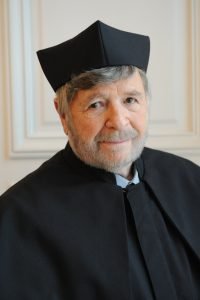
Shevah Weiss (1935 – 2023)

A prominent Israeli politician: a local government official, a member of the Knesset and its Speaker, and Ambassador of Israel to Poland from 2001–2003. Professor and founder of the Faculty of Communication at the University of Haifa. For over twenty years, he was a lecturer at the University of Warsaw’s Faculty of Political Science and International Studies, at the Center for Research on Israel and the Jewish Diaspora. He was awarded an honorary doctorate from the University of Warsaw (2011).

Shevah Weiss’s lectures at the University of Warsaw, dedicated to the history of the Jewish people and the State of Israel, were, like those previously in Haifa, very popular among students and also attracted many listeners from outside the university. Professor Shevah Weiss authored numerous academic works on state systems, social and local government policy, labor law, issues of equality and equal rights, Jewish identity, and ethnic problems.

From the beginning of his political activity, he belonged to the Labor Party. He worked closely with Israeli Prime Minister Yitzhak Rabin, a Nobel Peace Prize laureate, and shared his views on Israeli-Palestinian relations. He envisioned the resolution of the Israeli-Palestinian conflict through the establishment of two states: Jewish and Palestinian.

From 2000–2006, he served as Chairman of Yad Vashem. The politics of memory held an important place in his public activity. Professor Shevah Weiss was academically and politically engaged in Polish-Israeli-Jewish dialogue. In 2017, he received the highest Polish decoration, the Order of the White Eagle, from President Andrzej Duda, awarded to the most distinguished Poles and outstanding citizens of foreign countries.

Shevah Weiss’s public activity was highly regarded in both Israel and Poland. For the quality of governance and integrity in public service, he received the Amitai Award (1996) and the Movement for Good Governance Award (1999). Shevah Weiss identified with all actions aimed at respecting human rights and equality; for supporting these values, he was honored by the Beautiful Israel movement (1995) and with the “Meritorious for Tolerance” medal (2003). He was also awarded the Jan Nowak-Jeziorański Award (2018), granted for “thinking about the state as a common good,” the Missio Reconciliationis Commander’s Cross (2003), awarded to Polish and foreign citizens distinguished for their work in national reconciliation, and the Grand Cross of the Order of Merit of the Republic of Poland (2004). In 2008, he received the Sérgio Vieira de Mello Award (special award), granted for actions promoting peaceful coexistence and cooperation among societies, religions, and cultures, and in 2009, the “Bene Merito” Honorary Badge, an award given to Polish and foreign citizens for activities strengthening Poland’s position on the international stage.

Shevah Weiss held honorary doctorates from the University of Wrocław, the Medical University of Łódź, the Maria Grzegorzewska University of Special Education in Warsaw, the University of Economics in Katowice, SWPS University, and the aforementioned University of Warsaw.

He passed away on February 3, 2023, in Ramat Gan and was buried on Mount Herzl in Jerusalem. He rests in the section reserved for the most important Israeli leaders and particularly distinguished individuals.

About Us

The Center for Research on Israel and the Jewish Diaspora was established in 2008 by Professor Shevah Weiss, Professor Stanisław Sulowski, and Dr. Habil.   Elżbieta Kossewska, university professor. From 2008–2021, the Center was led by Professor Shevah Weiss, and subsequently by Dr. Habil. Elżbieta Kossewska. In May 2023, by decision of the Rector of the University of Warsaw and the authorities of the Faculty of Political Science and International Studies, the Center was named after Professor Shevah Weiss.

The Center for Research on Israel and the Jewish Diaspora conducts research, publishing, teaching, and training activities. We organize conferences, seminars, didactic classes, and prepare academic publications. The founders’ intention was to create a forum for debate on the significance of Israel and the Jewish diaspora in the contemporary world, Israel’s foreign and domestic policy, and Polish-Jewish relations.

Memories of Shevah Weiss
Publications

Shevah Weiss, Earth and Clouds. Joanna Szwedowska talks with Shevah Weiss, Pogranicze Publishing House, Sejny 2002

Shevah Weiss, I RememberKamila Drecka talks,  Wydawnictwo Literackie, Kraków 2018

Shevah Weiss, Elżbieta Cherezińska, From One Side, From the Other Side, Prószyński i S-ka Publishing House, Warsaw 2005

So Close… So Far, documentary film directed by Maciej Dutkiewicz, 2019.

Shevah Weiss's lectures intended for publication
Research
Grants

The Life and Work of Jewish Refugees from Poland in New York (1939–1950). History and Sources

Project Manager: Elżbieta Kossewska
NPRH/DN/SP/0117/2023/12

The aim of the project is to prepare for print a selection of documents, materials, and correspondence concerning the life and work of Jewish refugees associated with the bi-weekly magazine “Nasza Trybuna” published in New York between 1939 and 1950. A thin but active layer of assimilated Jewish intelligentsia, after Poland regained independence, entered a phase of developing a magnificent modern secular culture, interrupted by the outbreak of World War II. This culture continued in centers of Jewish refuge, one of which was the community of Jewish refugees organized around “Nasza Trybuna” in New York.   The journal gathered prominent writers, publicists, and individuals associated with art and theater.  In terms of reach and significance, it was the central Polish-language publication issued by Polish Jews in exile. The subject of research includes the community of Jewish refugees primarily gathered around the Representation of Polish Jews in America and the Association of Jewish Refugees from Poland connected with the bi-weekly “Nasza Trybuna.” The work will demonstrate the cultural, political, and informational significance of the journal. The project will document the achievements of Jewish refugees in the fields of literature, press, and culture, as well as the cultivation of the Polish language. The project will also present the relations of Jewish refugees with major Jewish centers worldwide, relations with the Polish Government-in-Exile in London, and the representation of the Jewish community in Palestine. The work will also address issues related to cultural and national identity. The legacy of this community is proof of its attachment to Polish culture and undoubtedly a magnificent chapter in the history of Polish Jews. The research will be an attempt to document Polish-Jewish relations and shared cultural heritage.

NCN Grant: Correspondence and Journalism of Dawid Lazer from Palestine/Israel (1941-1974)

Project Manager: Elżbieta Kossewska
2013/11/B/HS2/02755

Dawid Lazer was one of Israel’s leading journalists (born 1902 in Krakow, died 1974 in Tel Aviv).  Awarded Israel’s highest distinction – the Sokolov Prize in 1960.  His correspondence concerns prominent figures of Polish and world literature and journalism (including Aleksander Wat, Stanisław Vincenz and his wife Irena, Władysław Broniewski, Shmuel Agnon).  In Israel, the figure of Dawid Lazer is widely known. In Polish literature, on the contrary, not much attention has been paid to him, although he was very well recognized in the circles of “Kultura” and London’s “Wiadomości.” He was honored by the latter with the “Wiadomości” prize for prose (1973). The aim of the project is, in its first part, to write a biography of Dawid Lazer. In the second, to collect his correspondence, scattered in many archives and previously unknown to the reader, then to describe it and prepare it for publication. A query and analysis of articles published by Dawid Lazer in the Polish press in Palestine during World War II, as well as in Hebrew and Polish-language press published in Israel, will be conducted. This will allow for the creation of a narrative parallel to Lazer’s letters, and will also serve as material for their elaboration. In this way, a study will be created that will bring closer both Lazer’s intellectual and journalistic activity, as well as
his friendships, and above all, the course of disputes conducted by intellectuals in the 20th century.
Lazer’s correspondence and journalism reveal the thoughts of well-known and respected writers and journalists on events that shook primarily generations who experienced the horrors of World War II firsthand. His correspondence also brings closer the discourse on ideologies that captivated great minds of the 20th century (e.g., communism). Letters have this unique value and at the same time the advantage of often revealing the private lives of their authors, shedding light on their work and public life, introducing the reader to a very personal, intimate world of literary life. The time frame covers the years 1941–1974, with the first demarcation point being Lazer’s arrival in Palestine, and the second – his death.

NCN Grant: Polish Emigration in Palestine (1939-1948)

Polish Emigration in Palestine (1939-1948) 2016/23/B/HS3/03015
Project Manager: Elżbieta Kossewska

1. Aim of the research/research hypothesis
The aim of the project is to describe the fate of Polish emigration in Palestine between 1939 and 1948 against the backdrop of local and global political events and global migration movements during and after World War II. During World War II, Palestine was one of the largest and most important centers of civilian and military life for Polish emigration in the Middle East. Polish refugees, together with Jews who emigrated from Poland before and during the war, created a unique community there. The worlds of established residents of Palestine, especially those of Polish origin, and Polish-Jewish refugees intertwined in political, cultural, and social spaces, creating a shared history. Given that the problem of the state (in the case of Jews – creating a state, in the case of Poles – regaining it) constantly accompanied Polish emigration, the project poses the leading question of how the state (or its absence) influences the shaping of refugee identity and the fate of ethnic communities, as well as the constitution of values by which they live.
2. Research methodology/methods used
The historical method will be applied in this work. I adopt a type of inquisitive narrative that requires asking questions about the motives of human action, transcending the narrative form of results and entering into anthropology. Turning from history towards anthropology offers an opportunity to expand the area explored by historians, allowing for the functioning of communities and individuals to be shown by focusing attention on emotions and experiences (fears, hopes, motivations for action). Combining historical and anthropological methods is indispensable to show the expectations, customs, and beliefs of refugees, which largely determined their coexistence in a multi-ethnic environment. Historical statistics (extraction and standardization of data through categorization) will also be applied in the work. The analysis of research material will serve to build cause-and-effect chains, which will ultimately lead me to create a theory. By combining material and theoretical research, I intend to transfer historical knowledge into the field of social sciences and cultural anthropology. I want to interpret the deep meaning of human actions, simultaneously revealing the laws and mechanisms governing individuals and society.
3. Impact of expected results on the development of science, civilization, society
The project fills a gap in history concerning one of the important centers of Polish emigration during and after World War II. It also touches upon significant social issues – building community and state. The location, Palestine, imposes a strong context of religious matters and provides an exceptionally interesting panorama of ethnic and religious problems (Christianity, Judaism, and Islam). This approach to the topic allows for addressing important issues of identity, transformations, and tensions caused, for example, by the national question, which are important for the development of (also contemporary) societies. The value of the project is enhanced by its interdisciplinary nature, and its results can be applied in various fields of
humanities, especially since the issue of refugees is a socially important topic, occupying an increasing place in local and international politics.

MNiSW Grant: Universalia 2.1, (21H 17 0276 85)

Project Manager: Elżbieta Kossewska

“She still speaks Polish, but laughs in Hebrew. Polish-language press and cultural integration of Polish Jews in Israel.” The aim of the project (no. 21H 17 0276 85), financed by the Ministry of Science and Higher Education, is to translate Elżbieta Kossewska’s book, published by the University of Warsaw Press, from Polish to English: “She still speaks Polish, but laughs in Hebrew. Polish-language press and cultural integration of Polish Jews in Israel,” Warsaw 2015. In the English version, the book’s title will be: “Polish Jews in Israel: Polish-Language Press, Culture and Politics.” The work characterizes the journalistic and readership communities of Polish Jews organized around the partisan Polish-language press in Israel. It examines the significance and role of this press in the adaptation process of Jews who arrived in Israel from Poland between 1948 and 1970. During this time, the press documented the course of the adaptation process, various states of identity, and intercultural tensions, especially when the new olim [Jews arriving in Eretz Israel/Israel] were still suspended between the heritage of their country of origin and the values of the Jewish state, and only joining the Hebrew-speaking majority concluded their “cultural journey.”

The research direction adopted in the work also allowed for describing the history of Polish Jews in Israel, broadening the perspective with previously unknown fragments of their activity, in particular drawing the reader’s attention to their political and publishing activities. The work consists of seven chapters, and each of them, apart from the introductory chapter, is dedicated to six Polish-language publications of Israeli parties. The first chapter describes political and ideological issues related to the spread of the Hebrew language ethos and the quantitative growth of titles in the foreign-language press sector. Subsequent chapters, in chronological order, concern the Progressive Party and General Zionists, Mapai, Mapam, Maki, and Bund.

The work is interdisciplinary, covering problems in history, political science, cultural studies, and sociology. The methodology presented in the work can be used for research on ethnic groups, refugees, and multicultural societies.

Publications

E. Kossewska, Polish Jews in Israel: Polish-Language Press, Culture, and Politics, Boston (Brill Publishing), 2021, pp.444.
E. Kossewska, Marc Chagall – Dawid Lazer. Letters, Warsaw 2018.
The Burden of Memory, edited by E. Kossewska, Neriton Publishing House, Warsaw, 2009.
E. Kossewska, Hebrew Translation of Mythology. Letters of Jan Parandowski, Dawid Lazer and Dawid Ben Gurion, “Pamiętnik Literacki” 2018, no. 2, pp. 183–207
E. Kossewska, “I work for people who love…” David Lazar, Marc Chagall and the Jewish State, “The Jewish Quarterly Review”, 2021, vol. 111, no 1, pp. 1-9
E. Kossewska, The Hebrew Translation of Mitologia (Mythology): The Correspondence of Jan Parandowski, David Lazer and David Ben Gurion, “Gal-ED”, No. 26-27 (2021), pp. 161 -184.
E. Kossewska, Literature and Memory: The Correspondence between Marc Chagall and David Lazer, “The Polish Review” , vol 65, No 4 ( 2020), pp.23-35.
E. Kossewska, Władysław Broniewski in Palestine, “Archiwum Emigracji” , 2018/2019, no. 1-2, pp. 259-281.
E. Kossewska, Between Communism, Zionism, and Statehood: Władysław Broniewski in Palestine, “The Polish Review”, Vol. 66, No. 4, 2021, pp. 78 -105.
E. Kossewska, Homeland, State, and Language. The integration of Polish Jews into Israel, “Polin. Studies in Polish Jewry”, 2023, vol 35, pp. 323 -336.
E. Kossewska, Betwixt Jerusalem and New York: Jakub Apenszlak’s Attempt at Fostering Polish-Jewish Rapprochement in the Midst of World War II, Ohio University Press, 2023.

Photo gallery from the honorary doctorate award ceremony at the University of Warsaw

Photo gallery from the honorary doctorate award ceremony at the University of Warsaw
+13

Photo gallery from the ceremony of naming the Center after Professor Shevah Weiss

Photo gallery from the ceremony of naming the Center after Professor Shevah Weiss
+8

Photo gallery from the Jan Nowak-Jeziorański Award ceremony

Photo gallery from the Jan Nowak-Jeziorański Award ceremony
+22

Photo gallery from the Order of the White Eagle award ceremony

Photo gallery from the Order of the White Eagle award ceremony
+8

Photo gallery from the ceremony commemorating the first anniversary of Professor Shevah Weiss's death - lecture by Professor Shlomo Ben Ami

Photo gallery from the ceremony commemorating the first anniversary of Professor Shevah Weiss's death - lecture by Professor Shlomo Ben Ami
+8